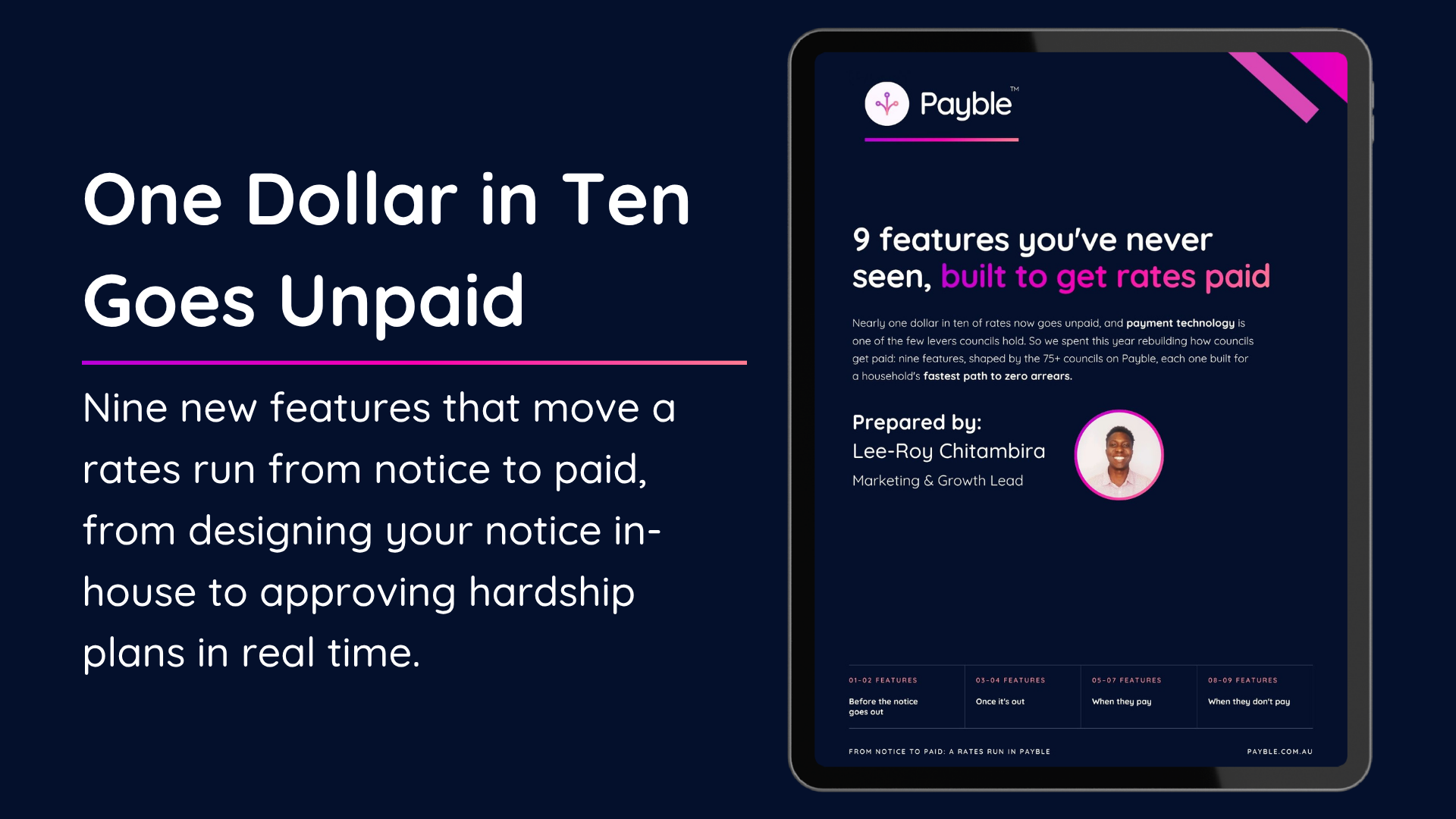
Nine Features Built to Get Council Rates Paid Faster
Nearly one dollar in ten of rates now goes unpaid, and payment technology is one of the few levers a council actually controls. Rate rises are set by the state, hardship demand keeps climbing, and the collection process at most councils has not changed in a decade.
What councils can change about rates payment
So we spent this year rebuilding how councils get paid. Nine features, shaped by the councils already on Payble, each one built around a single idea: every household should find its fastest path to zero arrears.
This fact sheet covers all nine, grouped by where they sit in a rates run. Before the notice goes out, once it is out, when residents pay, and when they do not. For each feature you get what it replaces at most councils today, what changes, and the numbers from councils already running it.
How we put this together
Every feature here came from customer feedback, then went through a live demo in a working environment at our August 2026 product showcase. Nothing in this fact sheet is a mockup or a roadmap item.
The numbers come from councils running these features now: Wellington Shire, Greater Dandenong, Whitehorse City Council, City of Parramatta, Hamilton City Council, City of Wanneroo, and City of West Torrens.

$250,000 more collected in early payments
Wellington Shire, compared with the same month a year earlier.

1,000 new payment plans in three weeks
Created at Greater Dandenong with no effort from the rates team. 85% of those plans finish on schedule.

$340,000 a year on print and postage
What City of Parramatta was spending before Payble. Every digital notice enrolment is postage a council never spends again.

