How The Hills Shire Got a Quarter of Ratepayers Onto Payble
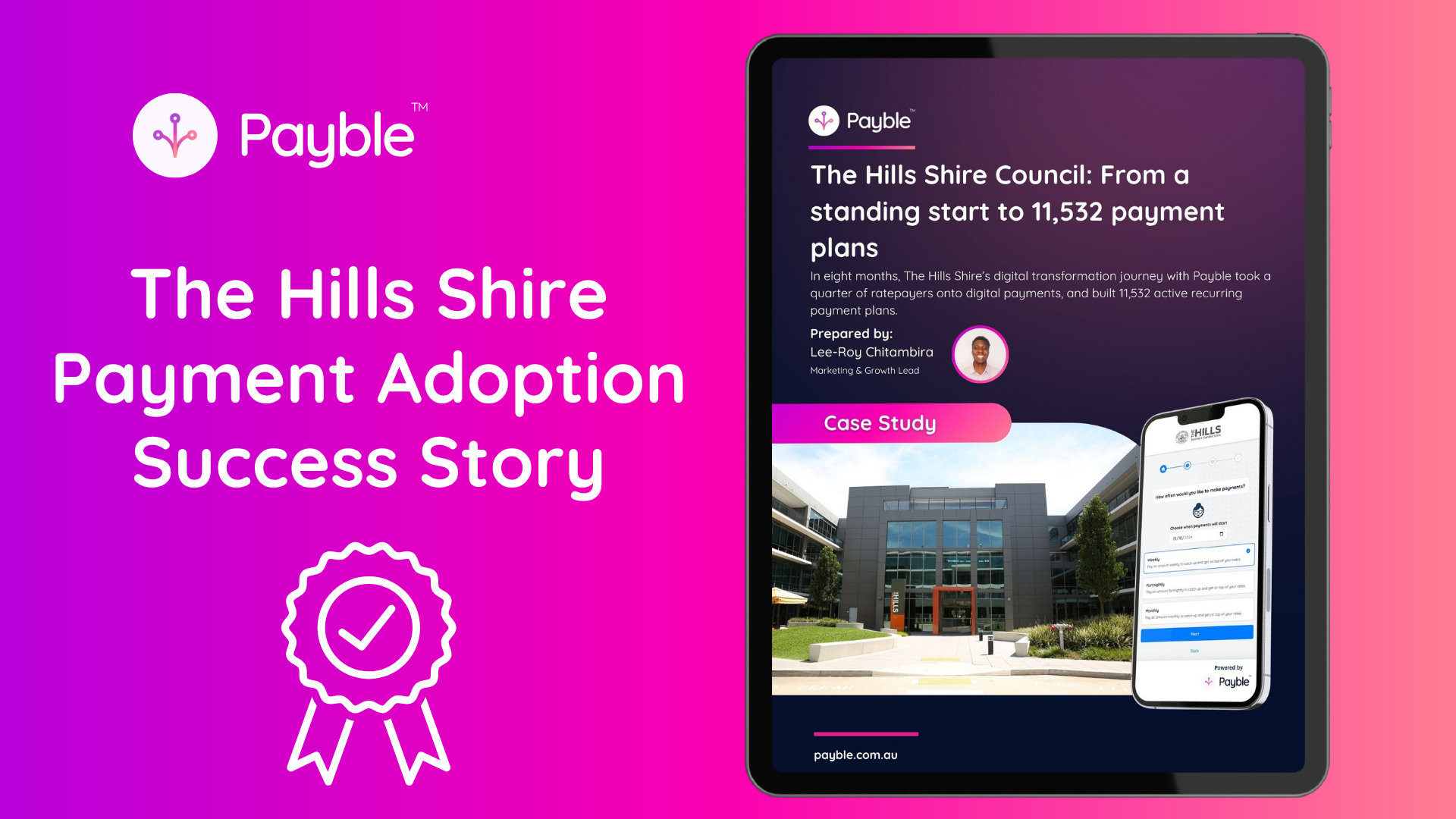
Most councils get 4 to 10% of ratepayers onto a recurring rates payment plan. The Hills Shire Council, a council of 80,000 properties in New South Wales, hit a quarter of its ratepayer base in eight months.
This case study covers exactly how The Hills Shire Council did it: a redesigned rate notice with one payment method on the front, a six-channel promotion campaign that all pointed to the same page, a council-made how-to video, and a habit of reading the low ratings instead of just celebrating the five-star ones.
What you'll get
What you will get
The month-by-month adoption numbers, the full rollout timeline, and seven moves any council can copy.

A quarter of ratepayers are on Payble in eight months.
The Hills Shire Council went from a standing start in January 2026 to 11,532 active payment plans by September, against a sector average of 4 to 10%.

One payment method on the front of the notice was the biggest driver.
Moving Payble to the front of the rate notice, on its own, was the change that mattered most. Active plans more than tripled in the first month alone.

Payble is now the second most used payment method at The Hills.
Behind BPAY, and ahead of phone, post and card payments, all within eight months of launch.
Latest Webinars
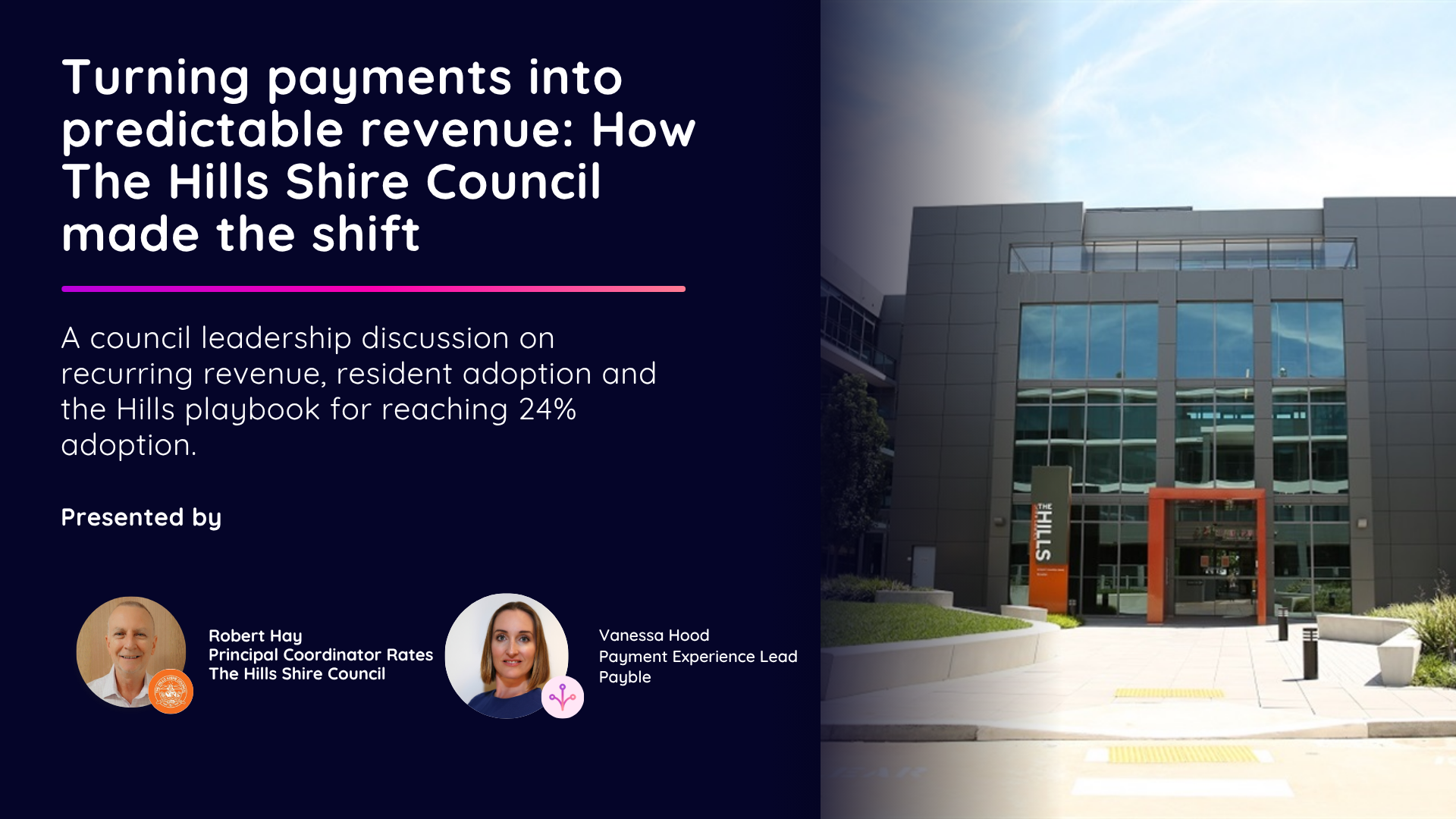
How The Hills Shire Council Turned Rates Into Predictable Revenue
Council Rates Payment Product Showcase: Nine Features, Demoed Live
Nearly one dollar in ten of council rates goes unpaid, and payment technology is one of the few levers councils hold. Watch all nine new rates features demoed live in a working environment: notice design in-house, pay-from-notice, delivery analytics, surcharge protection, and automated hardship review.
Australia's $2.4 Billion Rates Crisis: Where Does Your Council Rank?
Unpaid council rates have hit $2.4 billion nationally, growing faster than the rates base itself. Dailius Wilson and Vanessa Hood break down the state-by-state data, the five fixes that are working, and where your council ranks against 507 others.

